Reference Projects
Reinforcement Learning · PPO

Reinforcement Learning-Based AGV Dispatch Optimization

A PPO-based dispatch optimization system that manages the AGV fleet in real time through a hardware-independent decision layer, improving line-feeding continuity and optimizing in-plant logistics operations.
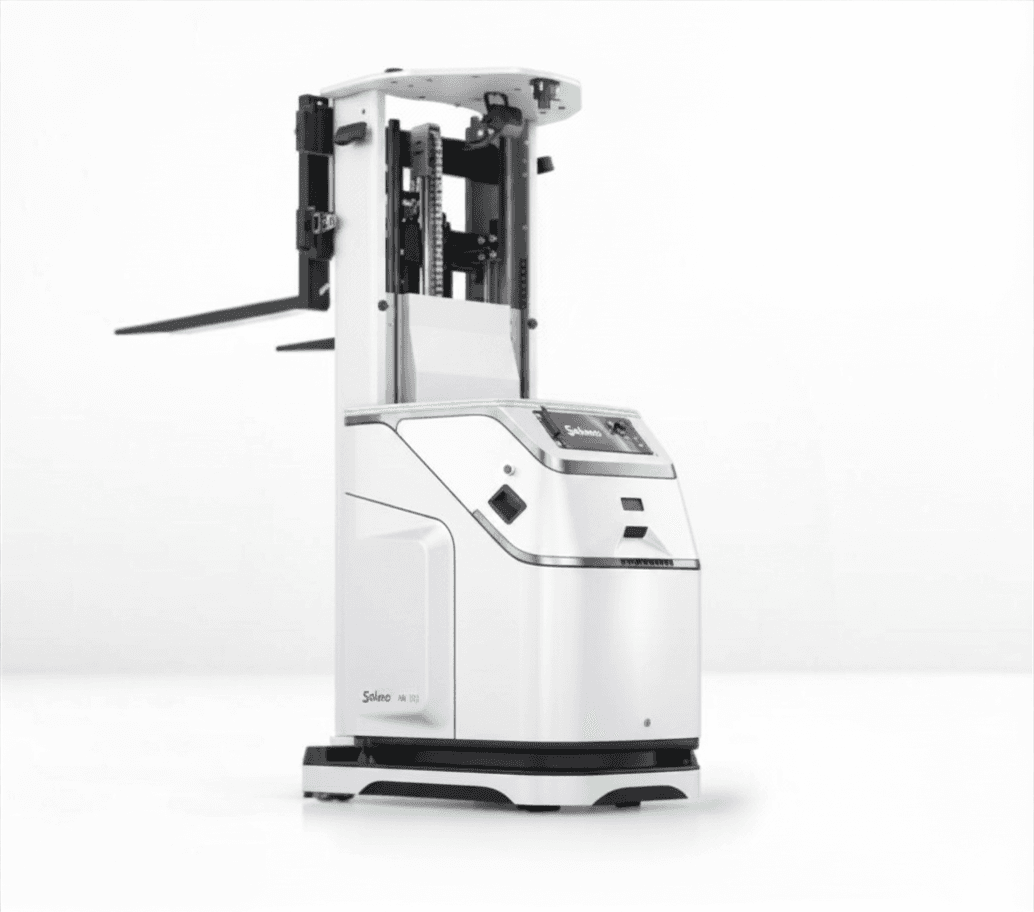
Autonomous AGV
AGV field operation — tote transport
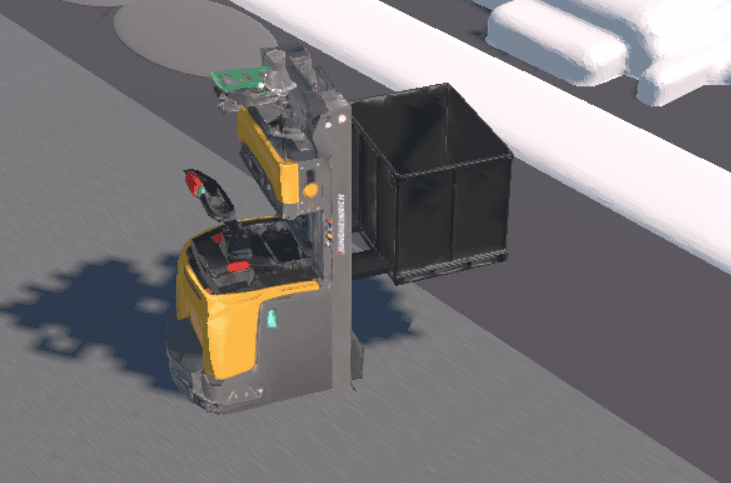
DIGITAL TWIN · FIELD
AGV operation modeled in a virtual environment

Tote/pallet transport, line feeding and charging cycles are modeled one-to-one in a physics-based digital twin. The decision engine learns and tests scenarios there without touching the floor.
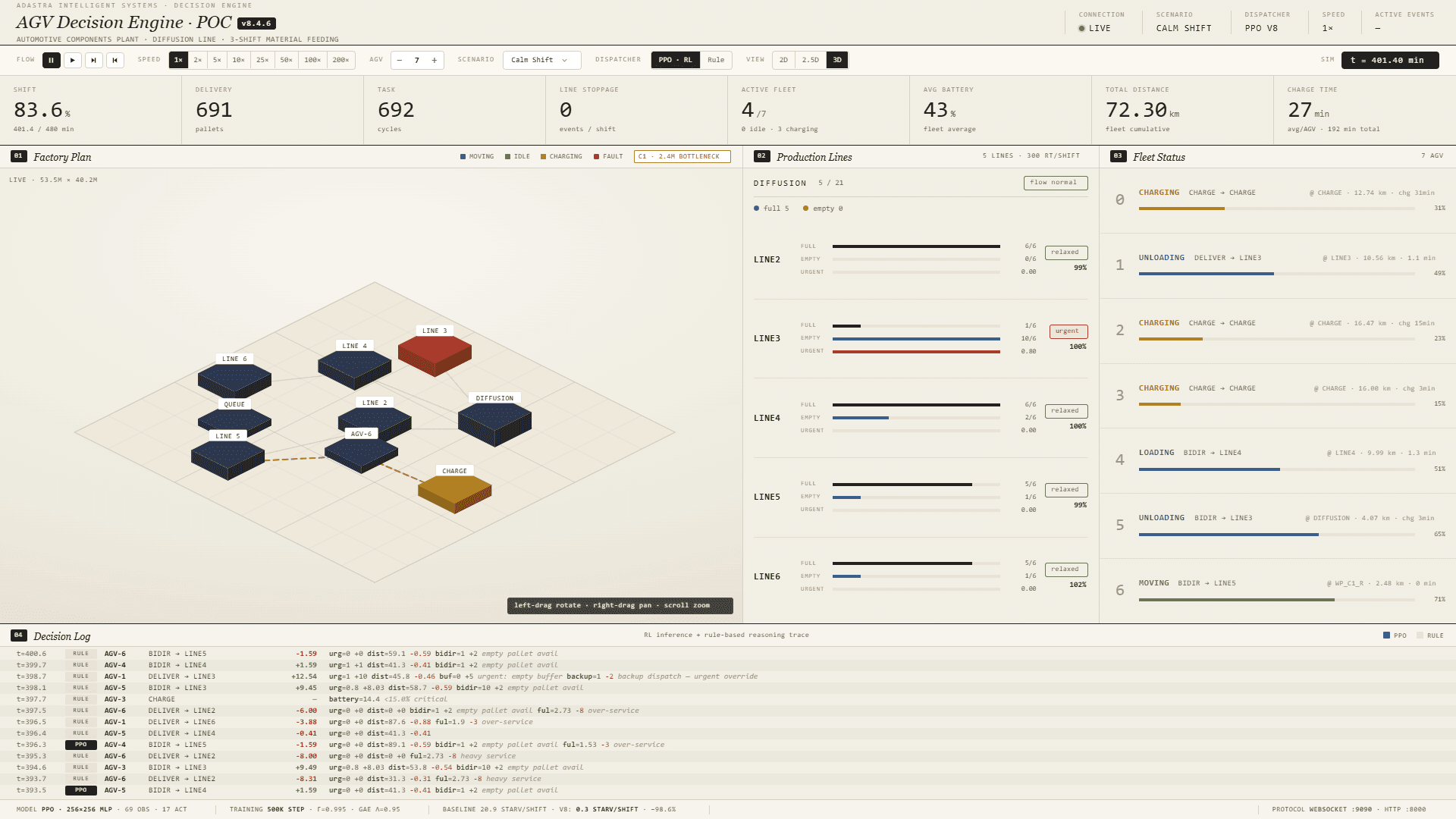
AGV Decision Engine · POC · Diffusion LineLIVE
AGV decision engine dashboard

Factory digital twin, line occupancy, fleet charge/task status and the PPO decision log (baseline vs AI).

Key Performance Indicators
%98.6
Reduction in line stoppages — from ~21 per shift to ~0.3.
%91
Active AGV ratio — fleet utilization rose from 72% to 91%.
50 dk
Average charging time — down from 70 min to 50 min.
%39
Increase in completed tasks — with the same fleet capacity.
CHALLENGE

AGV fleets are usually managed with rule-based dispatching; decisions rely on fixed priorities, distance or simple assignment logic. Yet the floor is dynamic: line demand, AGV positions, battery levels, traffic, charger availability and bottlenecks change constantly.

Especially at peak load, rule-based systems cannot handle this variability: line feeding is delayed, many stoppages occur per shift, part of the fleet stays underutilized and charging cannot be timed to production needs.

SOLUTION

The PPO-based decision engine optimizes dispatch decisions in real time. At every decision point, AGV positions, battery levels, task priorities, line demand, charging status, traffic and bottlenecks are evaluated together.

Dispatch is thus driven by overall production-flow performance rather than distance or simple priority; which AGV takes which task, with which priority and charging strategy, is determined dynamically.

System Architecture
01PPO-Based Decision Engine
At the core is a PPO reinforcement-learning model, optimized on line-feeding delay, idle-AGV ratio, charging behavior, completed tasks and bottleneck effects. Decisions can be compared against a baseline and audited via the decision log.
02Digital Twin & Simulation
The decision engine is developed in a physics-based simulation and Unity digital twin. The AGV fleet, lines, task points, charging stations and traffic are modeled virtually; scenarios are tested safely without touching the floor.
03Hardware-Independent Layer
An independent optimization layer that integrates on top of the existing AGV fleet and traffic software. It is adaptable and portable across AGV brands, traffic-management systems and factory layouts.
04Smart Charging Management
Charging decisions consider not just battery level but upcoming task load, charger availability and line-feeding risk. Mistimed charging and outages before critical tasks are prevented.
05Safe Fallback Structure
When situations fall outside safety and operating rules, the system reverts to the classic safe decision structure. AI optimization is delivered while operational continuity and floor safety are preserved; decisions remain auditable and boundable.
KEY BENEFITS
Reduces line stoppages
Increases fleet utilization
Raises task completion rates
Optimizes charging behavior
Runs independently of hardware
Testable without going to the floor
Makes decisions auditable
USE CASES
AGV fleet dispatch optimizationLine-feeding processesIntralogistics operationsMaterial handling & production supportCharging station utilizationBottleneck managementDigital-twin-based simulationMulti-vehicle autonomous decision systems
IN BRIEF

A hardware-independent AI decision engine that manages the AGV fleet in real time, improves line-feeding continuity, optimizes charging decisions and delivers higher task-completion rates in in-plant logistics.

AdAstra Intelligent Systems · Industrial Intelligent SystemsLet's Talk